

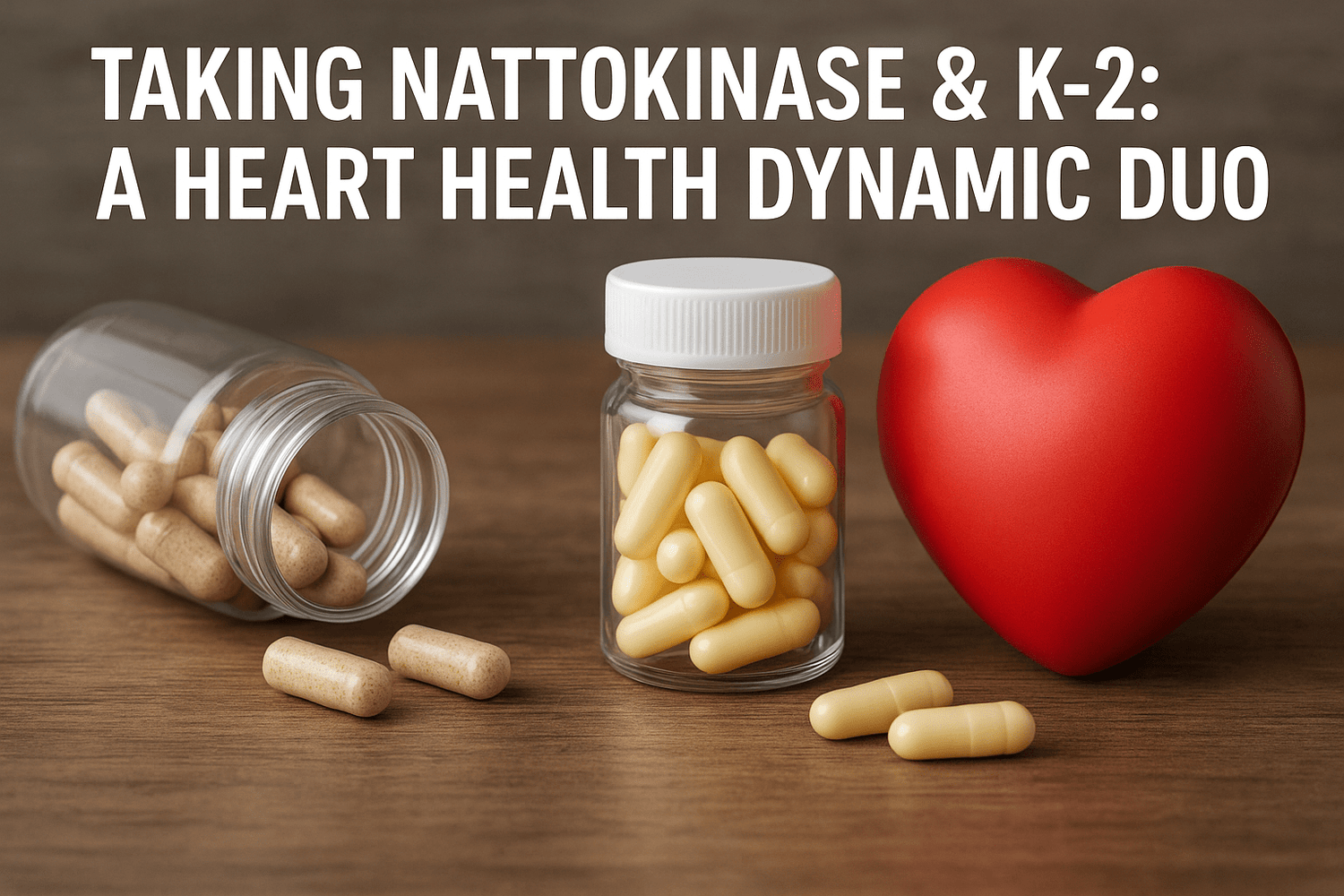
Nattokinase and vitamin K2 are two powerful nutrients that support cardiovascular health through different mechanisms. Nattokinase is a fibrin-dissolving enzyme derived from fermented soybeans that promotes healthy blood circulation. Vitamin K2 is a fat-soluble vitamin that directs calcium to bones while keeping it out of arteries. Together, these supplements work synergistically to support heart health, blood vessel flexibility, and proper calcium distribution. This comprehensive guide explains what nattokinase and vitamin K2 are, how they work together, who should take them, safety considerations, and how to choose quality supplements for optimal cardiovascular support.
Key Takeaways:
- Nattokinase breaks down fibrin to support healthy blood flow and may help maintain normal blood pressure
- Vitamin K2 activates proteins that direct calcium to bones and prevent arterial calcification
- These nutrients complement rather than interfere with each other's cardiovascular benefits
- Adults under 65 generally tolerate nattokinase well, but those on blood thinners should avoid it
- Vitamin K2 comes in two forms: MK-4 (fast-acting) and MK-7 (longer-lasting)
- Always consult your healthcare provider before starting any new supplement regimen
- Quality supplements should have third-party testing, clear labeling, and verified potency measurements

What Are Nattokinase and Vitamin K2?
Let's start with the basics before diving into the benefits. Here's what you need to know about both.
Nattokinase: The Powerful Enzyme from Fermented Soybeans
Multiple origin stories exist about how natto first appeared in history. The most well-known tale centers around an 11th-century samurai named Minamoto no Yoshiie. According to legend, Yoshiie's soldiers were cooking soybeans to feed their horses during a military campaign. They had to stop the cooking process suddenly due to an interruption. The partially cooked beans were quickly packed into bags made of straw. These bags sat untouched for several days before anyone opened them again. When soldiers finally opened the bags, they found the soybeans had fermented completely. Surprisingly, the troops tasted the fermented beans and found them quite enjoyable. This represents just one account of natto's discovery throughout Japanese history. The reality is that natto has remained a dietary staple in Japan for centuries.
Throughout history, natto served as a crucial source of protein in the Japanese diet. The fermentation process makes it ideal for storage over extended time periods. This quality proved especially valuable during long journeys or military campaigns in ancient times. The flavor profile is quite distinctive and takes time to appreciate fully. It features a sticky, stringy texture that many find unusual at first. The aroma is notably strong and pungent to those unfamiliar with it. Traditional preparation involves serving it over steaming hot rice with accompaniments like soy sauce. Mustard is also commonly added to enhance the overall flavor experience. Modern culinary creativity has incorporated natto into numerous dishes beyond the traditional preparation. You can now find it in soups, sushi rolls, and various other recipes. Today's production methods have made natto widely accessible in stores and markets everywhere.
What gives natto its remarkable health properties that people seek out today? The secret lies in its potent ability to break down fibrin in blood. This fibrin-dissolving action comes from a special enzyme called nattokinase found within natto. Blood clots form and hold together through a fibrous protein called fibrin. During the fermentation process, bacteria known as Bacillus subtilis produce nattokinase naturally. This enzyme works by dissolving the fibrin that keeps blood clots intact. The fibrin-breaking activity of nattokinase has captured attention from health-conscious individuals worldwide. Many people interested in supporting their cardiovascular health now use nattokinase. This cardiovascular benefit is the primary reason nattokinase supplements have gained popularity recently.
Vitamin K2: The Essential Nutrient That Controls Calcium Distribution
The vitamin K family includes several different variations that exist in nature. Two primary forms appear most frequently in the foods we consume daily. These are commonly known as vitamin K1 and vitamin K2 in nutritional science. Both belong to the fat-soluble vitamin category that our bodies need for proper function. Their main role involves helping the body regulate calcium levels and distribution effectively. Vitamin K1 carries the scientific name phylloquinone in medical and research literature. This particular form appears abundantly in leafy green vegetables like spinach and kale. Vitamin K2 is scientifically referred to as menaquinone by health professionals and researchers. You can find this form primarily in fermented food products such as natto. Animal-based foods like meat and certain dairy products also contain vitamin K2, according to the NIH Office of Dietary Supplements.
Despite belonging to the same vitamin family, these two forms serve distinct purposes. Vitamin K1 primarily focuses on supporting the blood clotting process in your body. This function helps prevent excessive bleeding when you experience cuts or injuries. Vitamin K2 contributes to blood clotting as well, but to a lesser degree. Its more significant role involves maintaining strong bones and a healthy cardiovascular system. The story becomes even more complex when you examine vitamin K2 more closely. There are actually two distinct subtypes of vitamin K2 worth understanding clearly. These subtypes are labeled MK-4 (menaquinone-4) and MK-7 (menaquinone-7) by scientists. MK-4 gets absorbed into your bloodstream rapidly after you consume it in food. MK-7 behaves differently by remaining in your bloodstream for much longer periods. This extended presence allows MK-7 to be absorbed gradually over time for sustained benefits.

The Heart Health Benefits: Two Distinct Pathways to Wellness
How exactly do nattokinase and vitamin K2 work to support your heart health? These two nutrients take completely different approaches to protecting your cardiovascular system effectively. Each one targets specific aspects of heart and blood vessel function uniquely. Understanding their individual mechanisms helps you appreciate why they work so well together. Let's explore the distinct ways each nutrient contributes to maintaining a healthy heart. Their combined effects offer comprehensive support for your entire cardiovascular system from multiple angles.
Nattokinase Benefits for Healthy Blood Circulation
Nattokinase dissolves fibrin as mentioned earlier in this discussion about its properties. Fibrin is the primary protein responsible for forming blood clots throughout your body. This enzyme helps maintain healthy blood flow by breaking down these clotting proteins effectively. Nattokinase promotes fibrinolytic activity by separating the fibrin strands holding clots together tightly. Fibrin naturally creates long, adhesive threads that weave together into a mesh-like structure. This mesh works to trap red blood cells and platelets at locations where injuries occur. The fibrin essentially functions as an internal bandage that helps stop bleeding when needed. Nattokinase supplements support optimal blood circulation by dissolving existing clots and reducing unnecessary fibrin buildup. Scientific research from Harvard Health Publishing indicates that nattokinase may also provide beneficial support for blood pressure levels. These combined effects make nattokinase valuable for maintaining cardiovascular health through improved circulation throughout the body.
Vitamin K2 Benefits for Proper Calcium Distribution
Most people immediately associate calcium with bone health when they think about this mineral. However, calcium actually deposits itself in various other tissues throughout your entire body. Sometimes these calcium deposits occur in places where they cause negative health consequences. Vitamin K2 plays a crucial role in directing calcium to beneficial locations only. It simultaneously keeps calcium away from areas where it shouldn't accumulate over time. Vitamin K2 accomplishes this by activating a specialized protein called osteocalcin in your body. This activated protein helps calcium bind properly to your bone matrix where it's truly needed. Research studies from the National Center for Complementary and Integrative Health suggest that vitamin K2 may support maintaining healthy elasticity in blood vessels. Vascular elasticity represents a critical factor in cardiovascular health and proper circulation maintenance. This flexibility allows blood vessels including your aorta to stretch with each heartbeat effectively. The vessels then retract smoothly as your heart relaxes between beats for optimal function.
The Science Behind Blood Clotting and Its Prevention
Stopping blood loss after any injury requires coordinated action at the microscopic level. Platelets immediately rush to the wound site and stick together to plug the opening. Blood clotting factors circulating in your bloodstream become activated by the injury signal quickly. These factors trigger a cascade of additional actions that ultimately lead to fibrin production. Fibrin then weaves itself into the platelet plug to create a stronger seal. The fibrin mesh also collects more platelets and red blood cells for reinforcement. This creates a more durable plug that effectively stops bleeding at the injury site. However, blood clot formation isn't always beneficial for your health and wellbeing. Nattokinase works by breaking down existing blood clots that may be problematic for circulation. It also helps prevent new clots from forming unnecessarily in your blood vessels. This dual action supports maintaining healthy blood flow throughout your entire cardiovascular system. Similarly, vitamin K2 promotes healthy circulation through a completely different mechanism than nattokinase. It achieves this by keeping calcium deposits out of your arterial walls permanently. Instead, it ensures calcium stays in your bones where it belongs for proper function.

The Big Question: Do They Work Together or Against Each Other?
Do nattokinase and vitamin K2 function as partners or do they oppose each other? The straightforward answer is that the relationship between them is actually quite complex. Let's examine the evidence to understand their true relationship within your cardiovascular system clearly.
Do These Supplements Work Against Each Other?
You might think nattokinase and vitamin K2 would neutralize each other's effects completely. However, they actually work together on the same team for your overall health. Consider them like players on a football team with different assigned positions. The offense and defense have separate roles but share the common goal of victory. Similarly, these nutrients affect blood clotting through completely different pathways and mechanisms. Blood will still form clots when your body experiences an injury that requires healing. However, inappropriate clotting that could harm your health won't occur unnecessarily in blood vessels. Meanwhile, nattokinase dissolves excess fibrin to prevent problematic clots from developing where they shouldn't. This balanced approach keeps your cardiovascular system functioning optimally without compromising natural healing processes.
Research Supporting Their Complementary Relationship
Natto naturally contains high levels of vitamin K2 alongside nattokinase in the same food. Nature has already paired these two nutrients together within this traditional fermented soybean dish. One comprehensive large-scale study examined nattokinase's effects on cardiovascular health markers extensively. Researchers discovered that vitamin K2 created a synergistic effect on blood lipid levels positively. This means the two nutrients working together produced better results than either alone. Numerous scientific studies have investigated the individual effects of both nattokinase and vitamin K2. However, more research is still needed to fully understand their combined interactions precisely. Scientists need to explore how they work together at the microbiological level in detail. Despite this knowledge gap, both nutrients clearly support cardiovascular health through improved mechanisms. They each help maintain healthy blood circulation throughout your body in their unique ways. Their complementary actions suggest they enhance rather than diminish each other's beneficial effects overall.
How These Two Nutrients Actually Cooperate
Your body possesses an incredible self-sealing system that protects against blood loss from wounds. What makes this even more remarkable is how your body regulates two opposite functions. It keeps blood flowing smoothly through vessels while also stopping flow completely when needed. The working relationship between nattokinase and vitamin K2 operates on a synergistic level primarily. Their partnership is more about complementary support rather than direct interaction with each other. Each nutrient addresses different aspects of cardiovascular health without interfering with the other's function. Together they create a comprehensive approach to maintaining optimal heart and blood vessel wellness. This cooperative dynamic allows both to enhance your overall cardiovascular protection effectively and safely.

Who Should Consider Adding This Powerful Combination
Let's explore who may benefit most from incorporating these supplements into their lives. Understanding your personal health goals helps you make informed supplementation decisions. Consider your current diet, lifestyle factors, and cardiovascular objectives when making this choice.
Age and Health Factors to Consider Carefully
Nattokinase Supplementation Guidelines
Most healthy adults under 65 typically respond well to nattokinase supplements. Adults over 65 need extra caution before starting this supplement. Potential side effects include increased bleeding risk, especially for seniors taking certain medications. Blood-thinning medications can interact with nattokinase and amplify bleeding risks significantly. Insufficient research exists regarding nattokinase's effects during pregnancy or breastfeeding. People in these categories should completely avoid nattokinase supplements for safety. Children should not take nattokinase without professional medical guidance from a qualified healthcare provider. Always consult your doctor before introducing any new supplement regimen.
Vitamin K2 Supplementation Guidelines
Everyone can benefit from adequate vitamin K2 intake for optimal health. However, obtaining it through supplements isn't always necessary for every individual. The recommended daily intake varies based on multiple individual factors. Consult your healthcare provider for personalized guidance on appropriate dosing. Those concerned about bone health should discuss vitamin K2 with their doctor. People worried about vascular health should also consider talking to their provider. Your doctor can assess your specific needs and recommend whether supplementation makes sense. They'll consider your diet, health status, and current medications.
Lifestyle Factors and Nutritional Deficiency Risks
Nattokinase and Your Daily Habits
People with sedentary lifestyles face higher risks of developing circulation problems over time. In contrast, active lifestyles naturally promote healthy blood flow throughout your body. Your diet determines your nattokinase intake levels daily. Eating plans excluding natto or fermented soy products provide virtually no nattokinase. Nattokinase isn't classified as an essential nutrient by nutritional science standards. No officially recognized deficiency state exists in medical literature currently. Despite this, many people choose supplementation to support cardiovascular health goals proactively.
Vitamin K2 and Lifestyle Influences
Sedentary lifestyles increase susceptibility to bone health problems and cardiovascular issues. Active lifestyles provide natural support for strong bones and a healthy heart. Food sources containing vitamin K2 may not provide sufficient amounts for everyone's needs. Individual circumstances like age, diet quality, and health status determine intake adequacy. This variability can lead to vitamin K2 deficiency over time gradually. High-stress lifestyles often result in poor food choices lacking nutritional value. These unhealthy patterns reduce vitamin K2 availability in your diet. Signs of deficiency can manifest in several concerning ways throughout your body. Blood clotting irregularities may appear as early symptoms of deficiency. Poor bone health including decreased density and increased fracture risk may develop. Cardiovascular issues can emerge as a consequence of prolonged vitamin K2 insufficiency. Recognizing these warning signs helps you address deficiency before serious problems develop.
Important Safety Considerations Before Supplementing
Always consult your healthcare provider before adding any supplement to your daily routine. This professional guidance ensures the supplement is safe and appropriate for your situation. Your doctor understands your medical history and can identify potential risks or interactions. They can recommend proper dosing based on your individual health needs. Here are crucial points to discuss during your consultation.
When to Avoid These Supplements Completely
Pay close attention if you fall into any of the following categories. Identifying these conditions helps you make the safest choice for your health. Some people should avoid these supplements entirely due to potential risks. Others may need modified dosing or extra monitoring. Review this list carefully and discuss concerns with your healthcare provider.
Nattokinase: Critical Safety Warnings and Contraindications
- Avoid nattokinase if taking anticoagulant medications without medical supervision
- People using antiplatelet medications face high risks for bleeding complications
- Blood-thinning medications combined with nattokinase could amplify effects dangerously
- Stop nattokinase well in advance if scheduled for surgery
- Increased bleeding risk makes this supplement unsafe during surgical procedures
- Those with blood clot history (strokes, DVT, pulmonary embolisms) need extreme caution
- People with low blood pressure should avoid nattokinase as it may lower pressure further
- This could cause dizziness, fainting, or serious cardiovascular complications
- Pregnant women should not take nattokinase due to insufficient safety research
- Breastfeeding mothers should avoid this supplement to protect nursing infants
- Anyone with a natto allergy must avoid nattokinase completely
- Allergic reactions range from mild discomfort to life-threatening anaphylaxis
Vitamin K2: Critical Safety Warnings and Contraindications
- Anyone taking vitamin K antagonist blood thinners must avoid vitamin K2 entirely
- Medications like warfarin block vitamin K, and supplements counteract their effectiveness
- People with severe kidney issues need strict medical supervision before taking vitamin K2
- Impaired kidney function affects how your body processes this fat-soluble vitamin
- Anyone with liver issues should avoid vitamin K2 or use only under medical monitoring
- Liver disease can lead to dangerous vitamin K2 accumulation in the body
- People with vitamin K2 allergies must completely avoid supplements containing this nutrient
- Allergic reactions range from mild skin irritation to serious respiratory complications
- Always discuss your complete medication list and health conditions with your doctor
- This ensures you avoid dangerous interactions and receive proper guidance
Working with Healthcare Providers for Supplement Safety
Everyone's health needs differ, making healthcare provider consultation essential. Discuss these topics during your appointment:
- Disclose all medications and supplements, including over-the-counter products
- Share your complete medical history, especially bleeding or clotting problems
- Mention past cardiovascular events, surgeries, or clotting disorders
- Ask about potential interactions between current medications and new supplements
- Get specific dosage recommendations tailored to your unique situation
- Include special situations like pregnancy or breastfeeding
- Be honest about your health goals and desired results
- Schedule followup appointments to monitor progress
- Evaluate results regularly so your doctor can make necessary adjustments
- Discuss any unexpected symptoms immediately with your provider
- Maintain open communication throughout your wellness journey

Finding Quality Supplements for Optimal Results
If you've decided that a nattokinase or vitamin K2 supplement is right for you. You want to make sure you're investing in the highest quality products available. Not all supplements are created equal, and quality varies significantly between different brands and manufacturers. Choosing a high-quality supplement ensures you get the proper dosage and purity for effectiveness. It also minimizes your risk of consuming contaminants or ineffective formulations that waste your money. Here's what you need to know about selecting the best nattokinase and vitamin K2 supplements.
What Makes a Good Nattokinase Supplement
When shopping for a high-quality nattokinase supplement, make sure to look for these important features:
- Verified enzyme activity should be clearly stated in fibrinolytic units (FU) on the label
- This measurement is how proper dosage is determined and ensures consistent potency in every dose
- Look for products that explicitly state the FU content rather than vague milligram measurements alone
- For nattokinase supplements, processing methods matter significantly for quality and effectiveness of the product
- Following precise fermentation guidelines allows manufacturers to achieve optimal nattokinase yield from the soybeans
- Modern purification methods drastically reduce impurities and unwanted compounds from the final supplement product
- Using the spray drying method helps prevent enzyme degradation during the manufacturing process effectively
- This technique also improves storage stability so the supplement remains potent throughout its shelf life
- Choose brands that are transparent about their manufacturing processes and quality control standards consistently
Choosing the Right Vitamin K2 Supplement
When shopping for a high-quality vitamin K2 supplement, you need to understand the options. There are two main forms available: MK-4 (menaquinone-4) and MK-7 (menaquinone-7) on the market.
- MK-4 is quickly absorbed by tissue but has a short half-life in your bloodstream
- This means it doesn't stay in your system for extended periods of time
- Doses may need to be taken more frequently throughout the day for effectiveness
- MK-7 has a longer half-life in the bloodstream for sustained presence over time
- It remains available for your body to use throughout the entire day consistently
- This may be more convenient with only one daily dose needed for optimal results
- Some supplements contain both MK-4 and MK-7 to leverage the benefits of both forms
- This combination approach provides both immediate and sustained vitamin K2 availability for your body
When shopping for any supplement, always look for these quality indicators and signs:
- Third-party testing certifications and seals that verify quality and purity of the product
- Independent lab testing from organizations like ConsumerLab ensures the supplement contains what the label claims without contaminants
- High-quality ingredients with clear sourcing information provided by the manufacturer transparently
- Stay away from products with artificial ingredients or unnecessary additives that provide no benefit
- Clear and complete labeling that lists all ingredients with their specific amounts and purposes
- All ingredients should be noted as either active or inactive on the product label
- Positive reviews by real people who have actually used the product and experienced results
- Look for detailed reviews that discuss specific outcomes rather than vague positive statements only
At NatureSpan, our products meet the highest quality standards in the supplement industry consistently. Every product is backed by third-party lab testing for purity and potency you can trust. Our manufacturing facilities are Good Manufacturing Practice (GMP) certified to ensure that quality remains consistent. This certification guarantees every batch meets strict standards for safety, quality, and effectiveness always.

How to Take Them for Best Results
To get the most out of your nattokinase or vitamin K2 supplement, follow these practices. Proper timing and dosage make a significant difference in how well these supplements work. Here are the guidelines you need to know for optimal effectiveness and results.
Timing and Dosage Guidelines for Maximum Benefits
Nattokinase can be taken at any time of the day that works for you. However, we suggest taking it at the same time each day for consistency. This helps maintain a steady amount of the enzyme in your system continuously. The suggested daily dosage is 100 mg, which equals 2,000 fibrinolytic units (FU) typically. Always follow the specific dosage instructions on your supplement label or from your healthcare provider, as recommended by MedlinePlus.
Since vitamin K2 is fat soluble, it absorbs best when taken with food containing fat. Taking it with a meal that includes healthy fats improves absorption significantly into your body. It should be taken at the same time each day to maintain steady levels. Consistent blood levels ensure your body has continuous access to this important nutrient throughout the day. MK-7 usually only needs to be taken once per day due to its longer half-life. MK-4 may need multiple doses throughout the day because it leaves your system more quickly. Follow the specific instructions for the form you choose to ensure proper dosing frequency.
Complementary Nutrients That Enhance Effectiveness
As mentioned earlier, nattokinase and vitamin K2 have a synergistic relationship with each other. Other nutrients may also support your cardiovascular and bone health goals when combined strategically. Understanding these complementary relationships helps you create a more comprehensive wellness approach for optimal results.
For example, omega-3 fatty acids with vitamin D and K2 support cardiovascular and heart health in ways that complement nattokinase. These healthy fats help maintain blood vessel flexibility and support healthy inflammation response throughout your body. Vitamin D supports bone health and may have a synergistic effect when taken with vitamin K2. Both nutrients work together to ensure calcium deposits in bones rather than soft tissues. Magnesium promotes healthy blood pressure levels and is essential for strong bone formation consistently. L-arginine and L-citrulline supplements make it complementary for both nattokinase and vitamin K2 supplementation programs effectively. Magnesium also supports hundreds of enzymatic reactions that keep your cardiovascular system functioning properly daily.
Food Sources That Provide Natural Support
Foods can also complement nattokinase and vitamin K2 supplements in your daily diet naturally. Natto contains both nattokinase and vitamin K2 in the MK-7 form within one food. This traditional Japanese dish provides the most concentrated natural source of both nutrients available. Cheeses like Gouda and Muenster are good sources of vitamin K2 for those who enjoy dairy. These aged cheeses develop higher vitamin K2 content through the fermentation process during production. Both sauerkraut and kimchi contain small amounts of vitamin K2 from bacterial fermentation processes. These fermented vegetables also provide probiotics and other beneficial compounds for digestive and gut health. Including these foods in your diet alongside supplements creates a well-rounded nutritional approach consistently, as noted by the Academy of Nutrition and Dietetics.
Supporting Your Overall Wellness Journey
Beyond cardiovascular health, nattokinase and vitamin K2 can support other aspects of your wellness. Many people interested in anti-aging supplements find that cardiovascular support plays a crucial role in longevity. Your heart health affects every system in your body from head to toe. Proper circulation ensures nutrients and oxygen reach all your cells efficiently throughout the day.
Additionally, those focused on immune system defense recognize that cardiovascular health and immune function are interconnected. A healthy circulatory system helps immune cells patrol your body effectively to fight infections. Some individuals also benefit from liver and lung support supplements alongside cardiovascular nutrients for comprehensive health. Your organs work together as a team, so supporting multiple systems creates synergistic benefits.
For those managing weight management goals, improved circulation from nattokinase may enhance metabolic function. Better blood flow means more efficient nutrient delivery and waste removal from tissues. Women interested in prenatal and women's health should note that vitamin K2 plays important roles in bone health throughout life. However, pregnant and nursing women should avoid nattokinase due to insufficient safety data.
Athletes and active individuals seeking energy and endurance support may find cardiovascular supplements beneficial for performance. Optimal blood flow delivers oxygen to working muscles more efficiently during exercise sessions. Some people also explore eye and vision care supplements as part of comprehensive wellness programs. Remember that vascular health affects all organs including the delicate blood vessels in your eyes.
If you're interested in exploring our full range of wellness products, visit our complete supplement collection today. We offer targeted solutions for every health need and wellness goal you may have. You can also learn more about our company and our commitment to quality and transparency.
Conclusion
Understanding the powerful benefits of nattokinase and vitamin K2 represents an important first step forward. Taking action to incorporate these nutrients into your daily routine is what truly matters. Whether you choose traditional natto or convenient supplements, you're making a smart business decision. Investing in your cardiovascular health today pays dividends in quality of life for years ahead. Your heart works tirelessly every single day pumping blood throughout your entire body continuously. Doesn't it make good business sense to support this vital organ with proven nutrients? Start by consulting your healthcare provider to determine if these supplements are right for you. They'll help you create a personalized plan that aligns with your specific health goals perfectly. Remember that maintaining heart health is a lifelong business, not a short-term project requiring patience. Make the smart choice today and give your cardiovascular system the support it deserves. Your future self will thank you for this wise investment in long-term wellness. Contact our team to learn more about our cardiovascular support supplements.
Frequently Asked Questions
Can I take nattokinase and vitamin K2 together safely?
Yes, you can take nattokinase and vitamin K2 together safely for most healthy individuals. These two nutrients work synergistically rather than against each other in your cardiovascular system. They address different aspects of heart health through completely separate mechanisms without interfering negatively. However, always consult your healthcare provider before starting any new supplement regimen for personalized guidance. Your doctor can evaluate your specific health conditions and medications to ensure safe supplementation. The Mayo Clinic recommends discussing all supplement plans with qualified healthcare professionals.
How long does it take to see results from these supplements?
Results vary depending on individual health status, dosage, and consistency of supplement use daily. Some people notice improvements in energy and circulation within a few weeks of starting. However, significant cardiovascular benefits typically require several months of consistent supplementation to become noticeable. Blood vessel elasticity and calcium distribution improvements happen gradually over time, not overnight dramatically. Patience and consistency are key to experiencing the full benefits these nutrients offer for health. The U.S. Food and Drug Administration provides important information about setting realistic expectations for supplement results.
What's the difference between getting these nutrients from food versus supplements?
Food sources like natto provide nattokinase and vitamin K2 along with additional beneficial compounds naturally. However, obtaining therapeutic amounts consistently through food alone can be challenging for many people. Supplements offer concentrated doses and convenience without requiring you to eat natto regularly every day. They're particularly valuable if you dislike natto's taste or follow dietary restrictions limiting fermented foods. Combining both food sources and supplements creates the most comprehensive approach to cardiovascular nutrition. Resources like Harvard T.H. Chan School of Public Health provide detailed information about nutrient sources.
Will nattokinase interfere with my blood pressure medication?
Nattokinase may potentially interact with blood pressure medications by amplifying their effects on lowering pressure. This could result in blood pressure dropping too low, causing dizziness or fainting episodes. Always inform your healthcare provider about all supplements you're taking before starting nattokinase supplementation. Your doctor may need to adjust medication dosages or monitor your blood pressure more closely. Never stop or change prescription medications without explicit guidance from your healthcare provider first. The Centers for Disease Control and Prevention provides valuable resources about managing blood pressure safely.
Can I take vitamin K2 if I'm on blood thinners?
If you're taking vitamin K antagonist blood thinners like warfarin, avoid vitamin K2 supplements completely. These medications work by blocking vitamin K activity, and supplementation directly counteracts their effectiveness dangerously. This interaction can lead to serious complications including dangerous blood clots forming unexpectedly in vessels. However, some newer blood thinners don't interact with vitamin K2 the same way significantly. Always discuss any supplement plans with your doctor before starting if you're on anticoagulants.