

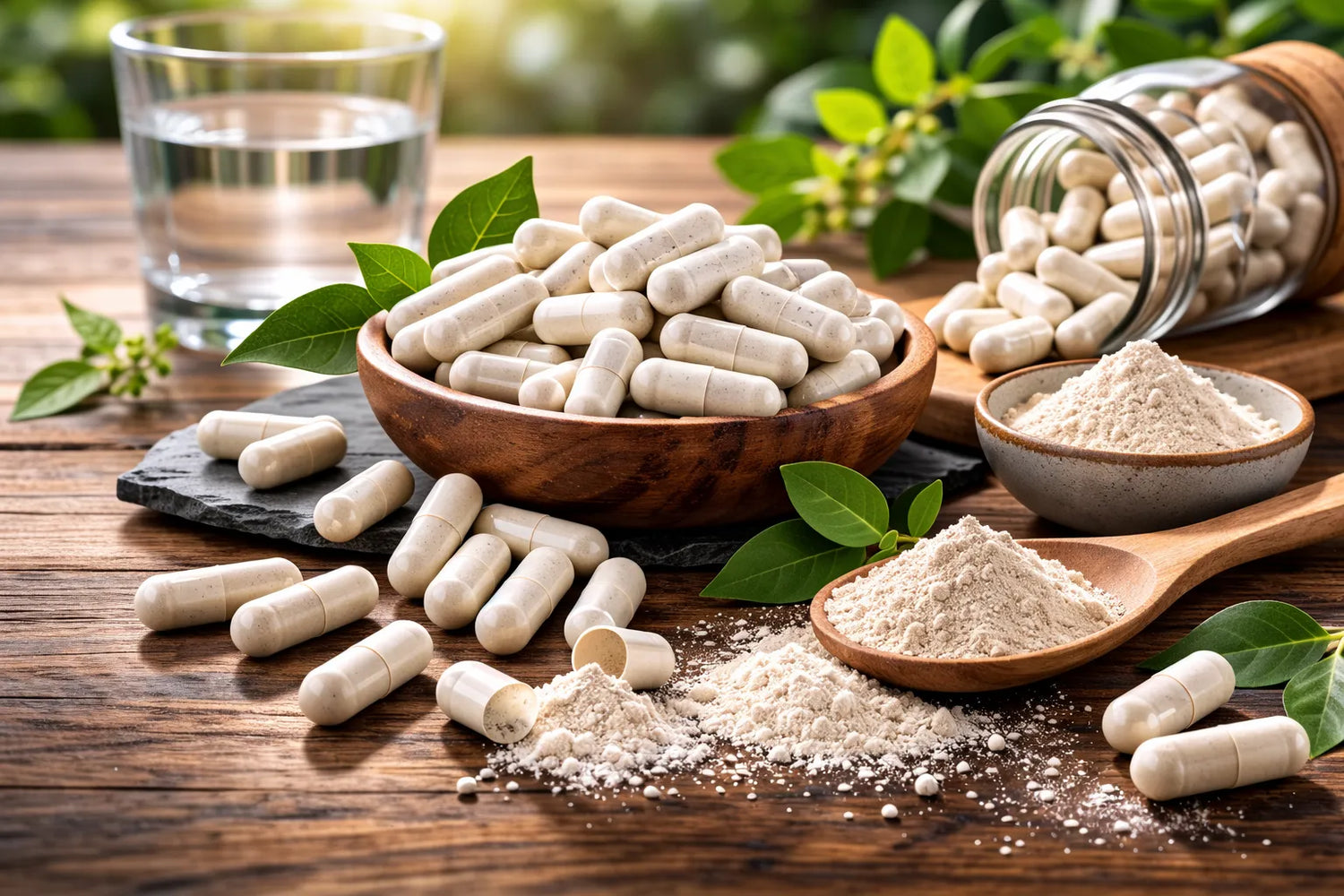
PQQ, or pyrroloquinoline quinone, is a compound naturally produced by certain bacteria. It is found in fruits, vegetables, and breast milk in trace amounts. You may also see it labeled as methoxatin or pyrroloquinoline quinone disodium salt. PQQ acts as a redox cofactor that supports energy production at the mitochondrial level. It promotes mitochondrial biogenesis, which is the creation of new mitochondria in cells. As an antioxidant, it helps neutralize free radicals and reduce oxidative stress. Early research suggests PQQ may support cognitive function, sleep quality, and inflammation control. Most studies so far are animal-based, with limited but promising human clinical trials. PQQ supplements are typically powders made through a bacterial fermentation process. The maximum suggested daily intake for adults is 20 milligrams per serving. This guide covers how PQQ works, its potential benefits, natural food sources, and safety.

What Is PQQ and How Does It Work?
PQQ stands for pyrroloquinoline quinone, a compound naturally produced by bacteria. These bacteria use PQQ to break down alcohol and sugar into usable energy. It is present in certain fruits, vegetables, and even human breast milk. You may also see it listed as methoxatin on supplement labels. Another common name is pyrroloquinoline quinone disodium salt. PQQ acts as a redox cofactor that supports cellular energy production at the mitochondrial level.

What Do PQQ Supplements Do?
Some people take PQQ supplements to support energy, memory, and mental focus. It is commonly marketed as a brain health and cognitive performance supplement. However, research on its full range of health effects is still limited. Scientists continue to study how PQQ supplementation impacts the body over time. More clinical evidence is needed before making definitive health benefit claims. Always consult a healthcare provider before adding any new supplement to your routine.
What Does PQQ Do Inside Your Body?
Scientists continue to research the biological role of PQQ in human health. Current studies show it activates key enzymes involved in mitochondrial function. Mitochondria are tiny structures inside your cells that produce energy for daily activities. PQQ supports these cellular powerhouses by promoting their growth and overall efficiency. This process is known as mitochondrial biogenesis and plays a vital role in energy production. PQQ also acts as a powerful antioxidant that may lower oxidative stress levels. Oxidative stress occurs when harmful free radicals outnumber protective antioxidants in the body. This imbalance allows free radicals to damage healthy cells and tissues over time. PQQ helps restore that balance by neutralizing excess free radicals at the cellular level. This protective action supports long-term cell health and reduces potential molecular damage. Its dual role in energy support and antioxidant defense makes PQQ a valuable compound.

What Are the Potential Health Benefits of PQQ?
Research on PQQ is still in its early stages with limited human clinical data. Most findings so far come from animal-based studies and laboratory experiments. While some human trials exist, the full scope of benefits is not yet confirmed. However, current evidence points to several promising areas of health support.
Strong Antioxidant Activity
Your body produces free radicals as a natural byproduct of energy metabolism. Normally, your system can clear these harmful molecules without any issues. When free radicals outnumber antioxidants, oxidative cell damage and chronic conditions may develop. PQQ acts as a potent antioxidant that helps neutralize this excess free radical activity. Some research suggests it may be more effective than vitamin C in this role. However, antioxidants tend to work best in combination with other protective nutrients. Taking PQQ alone may not be enough to prevent disease on its own.
May Support Healthy Mitochondrial Function
Mitochondria are the energy-producing centers found inside every cell in your body. Dysfunction in these structures has been linked to heart disease, diabetes, and cancer risk. Animal studies suggest PQQ may stimulate the creation of new mitochondria in cells. This process, called mitochondrial biogenesis, is critical for maintaining cellular energy output. Human research in this area remains limited and is still developing.
One study found PQQ supplements increased mitochondria in men during aerobic exercise. The results showed it influenced specific proteins involved in the exercise adaptation process. A separate study confirmed that dietary PQQ intake also boosted overall mitochondrial activity.
May Offer Antidiabetic Support
Mitochondrial dysfunction is closely linked to the development of type 2 diabetes. Factors like diet, exercise habits, sleep quality, and stress levels all affect mitochondrial health. Animal studies suggest PQQ may help correct mitochondrial issues caused by diabetes. Some data also shows improved insulin sensitivity in diabetic animal models after supplementation. However, no human clinical evidence currently supports PQQ as a treatment for diabetes.
Could Help Reduce Inflammation
PQQ may play a role in lowering key markers of inflammation in the body. Studies suggest it could reduce levels of C-reactive protein and interleukin-6 in blood. These biomarkers are commonly associated with chronic inflammatory conditions and disease risk.
Potential Cognitive and Nootropic Benefits
Nootropics are compounds known to support memory, attention, and learning ability. Research indicates PQQ may increase blood flow to the cerebral cortex of the brain. This region is responsible for higher-level thinking, focus, and memory processing. Improved circulation to this area may enhance overall cognitive performance over time.

Are There Any Known Side Effects of PQQ?
Current research on PQQ side effects remains limited and inconclusive at this time. The few human studies conducted so far reported no adverse effects with short-term use. There are also no documented cases of allergic reactions or overdose from PQQ supplements. It is important to note that PQQ in food differs from supplemental forms. Most PQQ supplements are powders produced through a bacterial fermentation process. These products can contain roughly 250 times more PQQ than natural food sources. Whether such concentrated amounts offer added benefits is still unclear to researchers. The maximum recommended daily intake for adults is 20 milligrams per serving. Individuals who are pregnant or breastfeeding should avoid PQQ supplementation as a precaution. Always consult a qualified healthcare provider before adding any new supplement to your routine. Some supplements may interact with medications or other dietary supplements you already take. It is not yet clear whether PQQ carries any risk of such interactions. Speaking with your doctor before starting PQQ is the safest approach for personalized guidance. Your doctor may also suggest alternative options backed by stronger clinical evidence. The most reliable way to get PQQ is through a balanced diet rich in fruits and vegetables. Whole foods provide PQQ alongside other essential vitamins, minerals, and protective nutrients.
Final Thoughts on PQQ Supplements
PQQ is a promising compound with antioxidant, mitochondrial, and cognitive support potential. Early research points to benefits in energy production, inflammation control, and brain health. However, most current evidence comes from animal studies with limited human clinical data. This means more research is needed before making strong health benefit claims. PQQ supplements are available as powders made through bacterial fermentation in controlled settings. The maximum suggested daily dose for adults is 20 milligrams per serving. Pregnant or breastfeeding individuals should avoid supplementation until more safety data is available. The safest and most natural way to get PQQ is through whole foods. Fruits and vegetables like kiwi, spinach, parsley, and green peppers contain small but useful amounts. Always speak with a qualified healthcare provider before starting any new supplement. They can help determine whether PQQ fits your personal health goals and current medications. A balanced approach that combines diet and professional guidance is always the best strategy.
Frequently Asked Questions About PQQ
What is PQQ and why is it important?
PQQ stands for pyrroloquinoline quinone, a compound naturally produced by certain bacteria. It supports mitochondrial function and acts as a potent antioxidant in the body. PQQ may also play a role in cognitive health, sleep quality, and inflammation control.
What foods are the best natural sources of PQQ?
Fermented soybeans, spinach, parsley, kiwi, papaya, and green peppers all contain PQQ naturally. Tea and celery are also everyday options with small but useful amounts. Breast milk contains PQQ as well, likely absorbed from the parent's diet.
How much PQQ should you take per day?
The maximum suggested daily intake for adults is 20 milligrams per serving. PQQ supplements contain significantly higher concentrations than natural food sources. Consulting a healthcare provider can help determine the right dose for your needs.
Are there any side effects of taking PQQ supplements?
No adverse effects have been reported in the limited human studies conducted so far. There are also no documented cases of allergic reactions or overdose from PQQ. However, long-term safety data is still lacking and more research is needed.
Can PQQ help improve brain function and memory?
Research suggests PQQ may increase blood flow to the cerebral cortex of the brain. This region controls attention, thinking, focus, and memory processing ability. While early findings are promising, more human clinical trials are needed to confirm results.